Hello dear readers, it's been a while since my last entry to the blog. I’m back and this time I think I will be more consistent with my updates. the reason why its because I decluttered my mind by taking a social media break, it’s been about 3 weeks and I already feel peace in my heart and mind from all the constant stimulation that we get from our feeds, I hope you guys experience this too I highly recommend.
I have been thinking about they way social media is a hamster wheel where we put ourselves to perform in order to get “views” which is an imaginary number that makes us believe we are promoting our business and we are playing “the game”, but over the last 3 weeks I noticed I have been more productive than ever in real life, my appointments have stayed consistent and all my new clientele comes either from word of mouth or my website anyway so what is the point? spending so much time on something that is not giving anything back in return and in fact is costing me my mental health.
lets get into todays topic the comic creative process applied to tattooing, I have been changing the way I have been working with my clients lately, by removing the pressure of having a final product to post at the end of the session, this allows the exploration of different creative workflows depending on the piece and to ensure a better client experience.
I’m a comic nerd and I learned that comics have a production pipeline to produce the books in a timely manner, they usually have a team of people behind each book: a writer, the penciler, the inker and the colorist. Each person is a specialist in their field and collaborate to get the best possible product for the audience. what does this have to do with tattooing you might be wondering? well tattooers for generations have handled all those jobs alone, which is a tremendous task if you ask me specially with a tight deadline and with the psychological pressure that its going on someones skins for the rest of their life.
So a lot of times tattooers go for classic motifs and ideas that have been proven to work over over to avoid making mistakes (because believe me the pressure is high) using tattoo reference is fine as long it’s an homage and not a straight copy.
with the rise of technology some even take the easy way out using AI for “their” design generation (booo) which in my opinion is LAME! tattooing is about personal artistic expression not generic AI slop on someones skin. (each person decides how they want to decorate their body no judgment)
For those of us who want to preserve the sacred craft of real tattooing, and we want to keep it human for humans this is my current artistic process, this has allowed me to develop tattoo concepts for my clients wearing a different “artistic hats” on each stage, to produce the best possible tattoos.
Writer Stage:
this is the consultation, I hear my clients ideas and its the equivalent of reading the script and understanding what the director wants for the story (your tattoo) here I try to draft a concept on the skin (usually a marker drawing where I lay out the basic composition of the. tattoo.
Penciler
Here I draft a few variations of the composition until I choose one, I make sure the structure and perspective complement the customers body part and narrative of the piece.
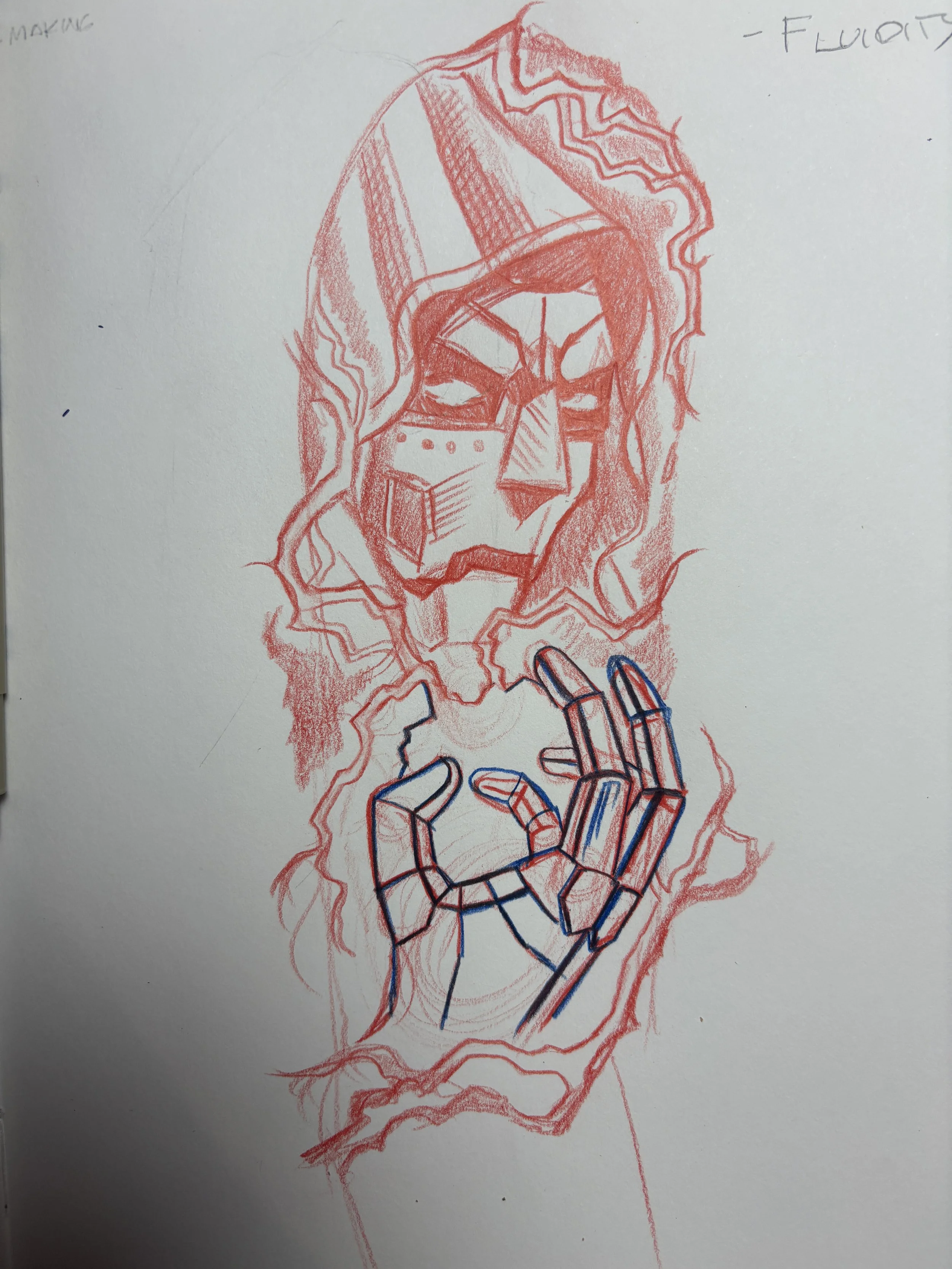
Red Pencil Draft, playing with forms and looking for the right flow and composition.
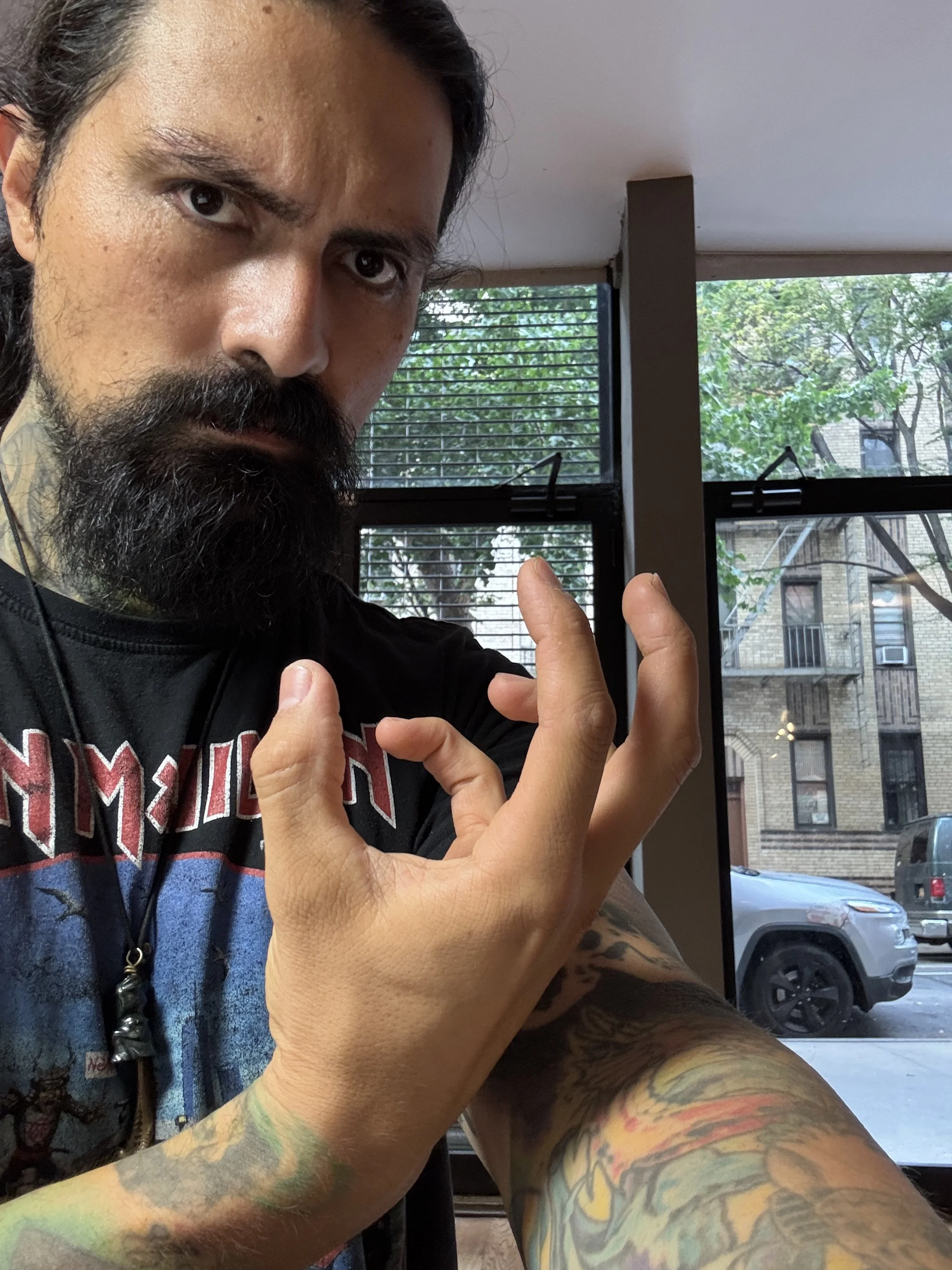
The intern is posing as my hand model, he happens to look very handsome!
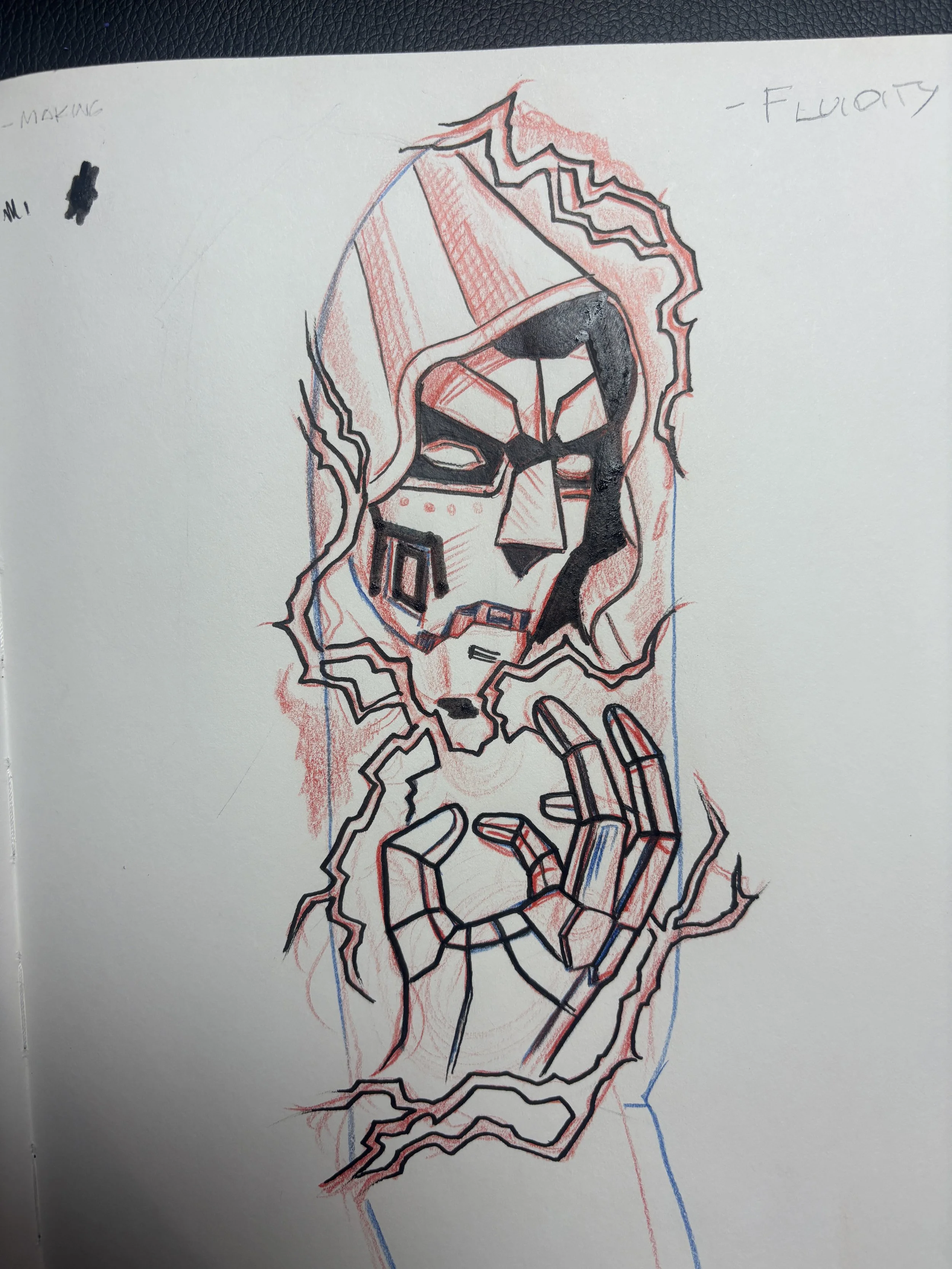
Committing which lines I will keep before the next stage which is digital rendering.
Inker
Once my pencil sketch is completed I do an inker stencil which its not the typical tattoo stencil, its generally a line drawing that has different line weights to help to convey structure, light sources, and overlap and direction of planes and shadow shapes that create the contrast of the piece.
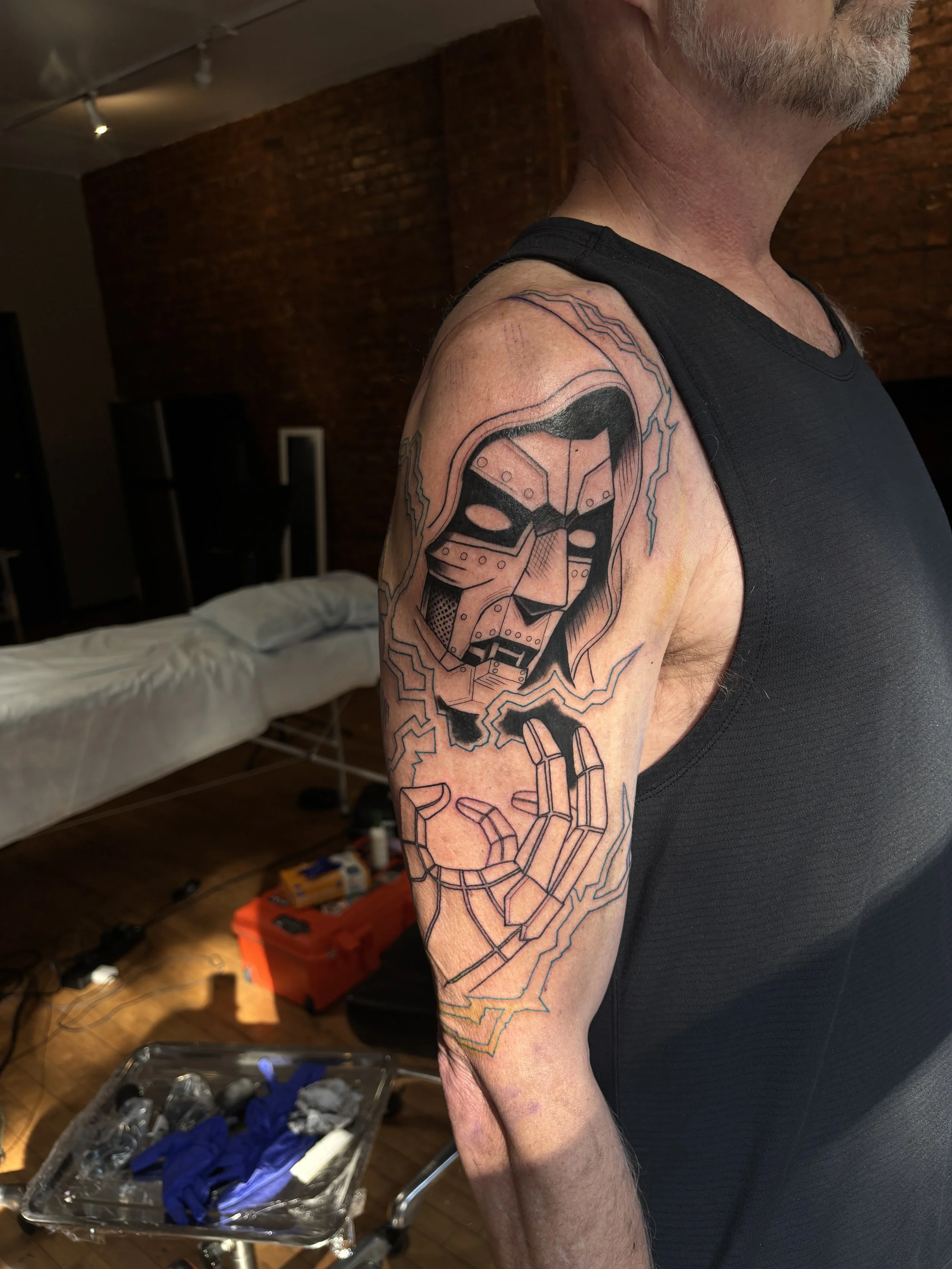
Line work and shadow shapes to set the contrast 2 hours, Ruben Barahona New York City Sept 16, 2026
Colorist
once the lines and shadows are healed its coloring time, which is the most fun part for me but without the emphasis on each previous stagse, not amount of fancy color tricks can fix an poorly drawn concept or bad contrasted design.
playing the different artistic roles allows me to focus on each stage of my creative process and helps me make original pieces without the pressure of coming up with novel ideas the night before, pushing through the work of 4 people in one night is an unrealistic expectation that just brings mediocre tattoos for lack of guidance and poor planning.
if you are looking to get a comic tattoo or any character you want me to develop for you I would love to hear your story and make it come true, all we need is to schedule a consultation, you can request a time by email : rubenbookingsnyc@gmail.com
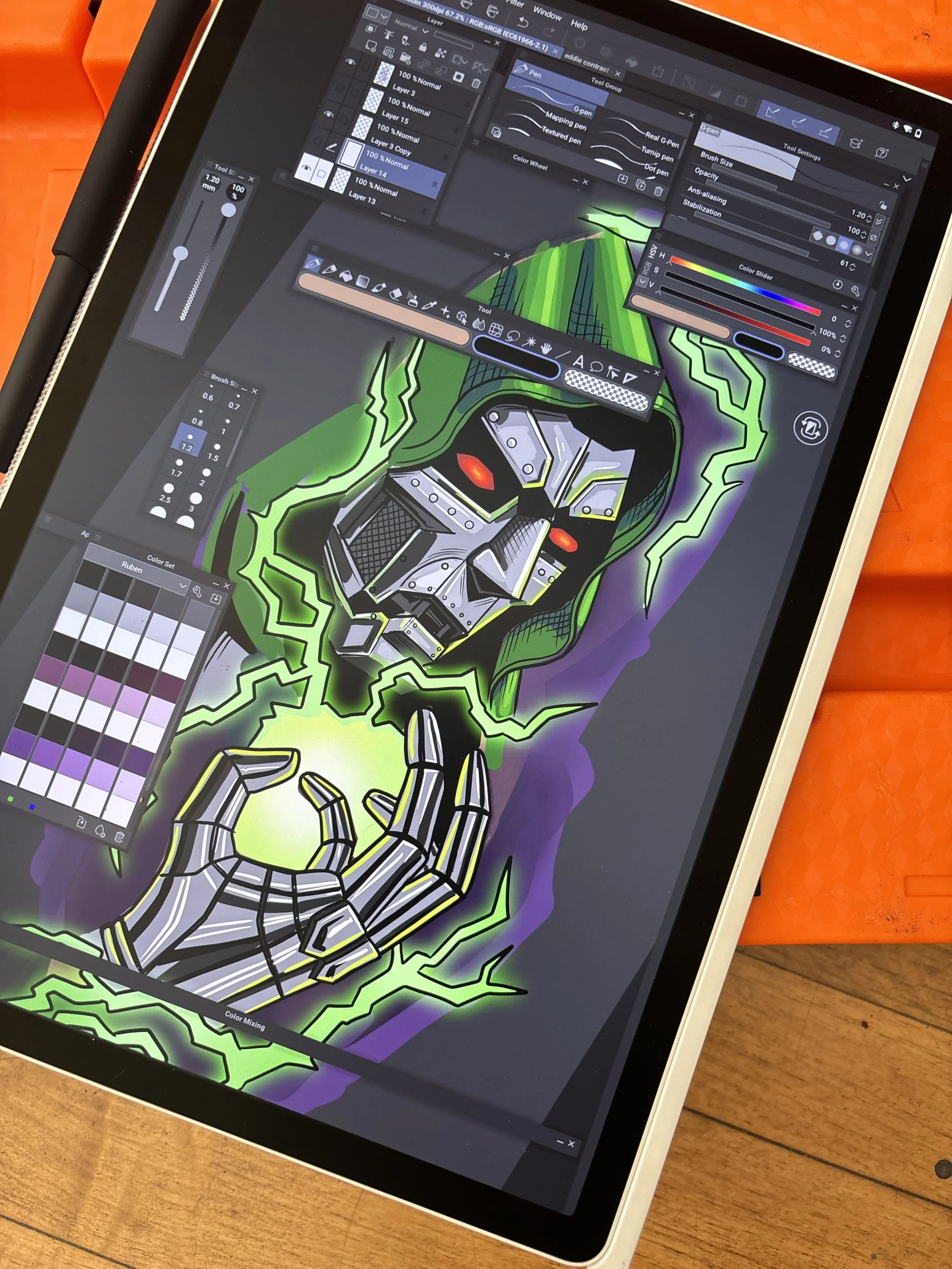
Here is a sample of the digital rendering I have before my first color session. the concept keeps evolving (i’m an instrument of the universe to manifest each piece)
First color sessions about 4 hours, clients is very tall, bigger than average arm.
second color session, face healed, background and hoodie. 4 hours. one more session to complete the hand
So there is only one more session to complete this piece, stay tuned for the final session and of course the healed pictures. Let me know if you have any questions and if you like to see the breakdown of my process. I have many pieces in the works similar to this one I can’t wait to share. thank your for reading and see your soon with more. Remember support human made art!
Ruben Barahona
New York City 2026.